Do you need an easel for watercolor?
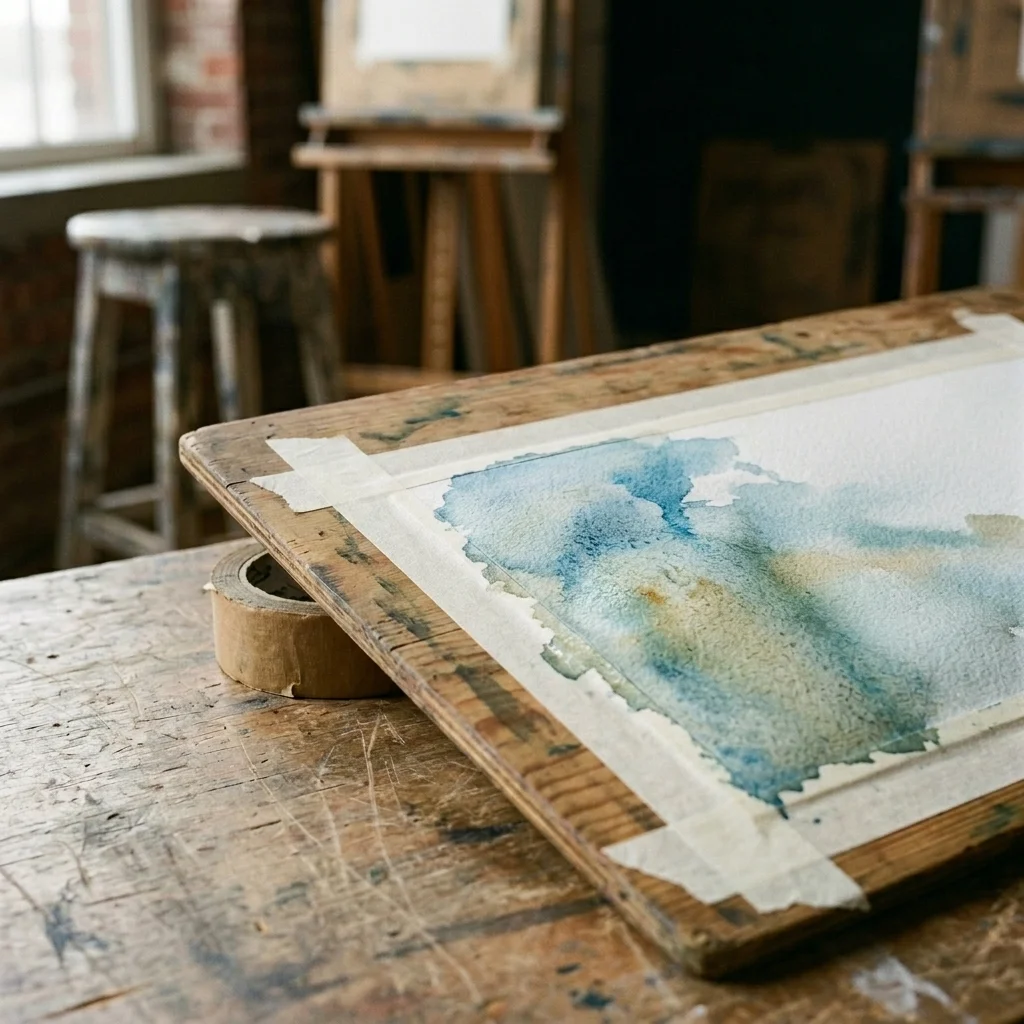
"Everyone on Instagram paints on an easel, but my watercolor just drips uncontrollably down the page!"
Here's something nobody tells beginners: a vertical easel is almost the worst possible setup for watercolor. It's perfect for oils and acrylics, which stay where you put them. But watercolor is a liquid, and liquids obey gravity. Upright, it runs straight to the floor before you can do anything.
The good news is that gravity isn't your enemy — it's one of your most useful tools. You need to point it in the right direction.
The Magic of the Bead
Should my paper sit flat or upright? The sweet spot is about 15 degrees.
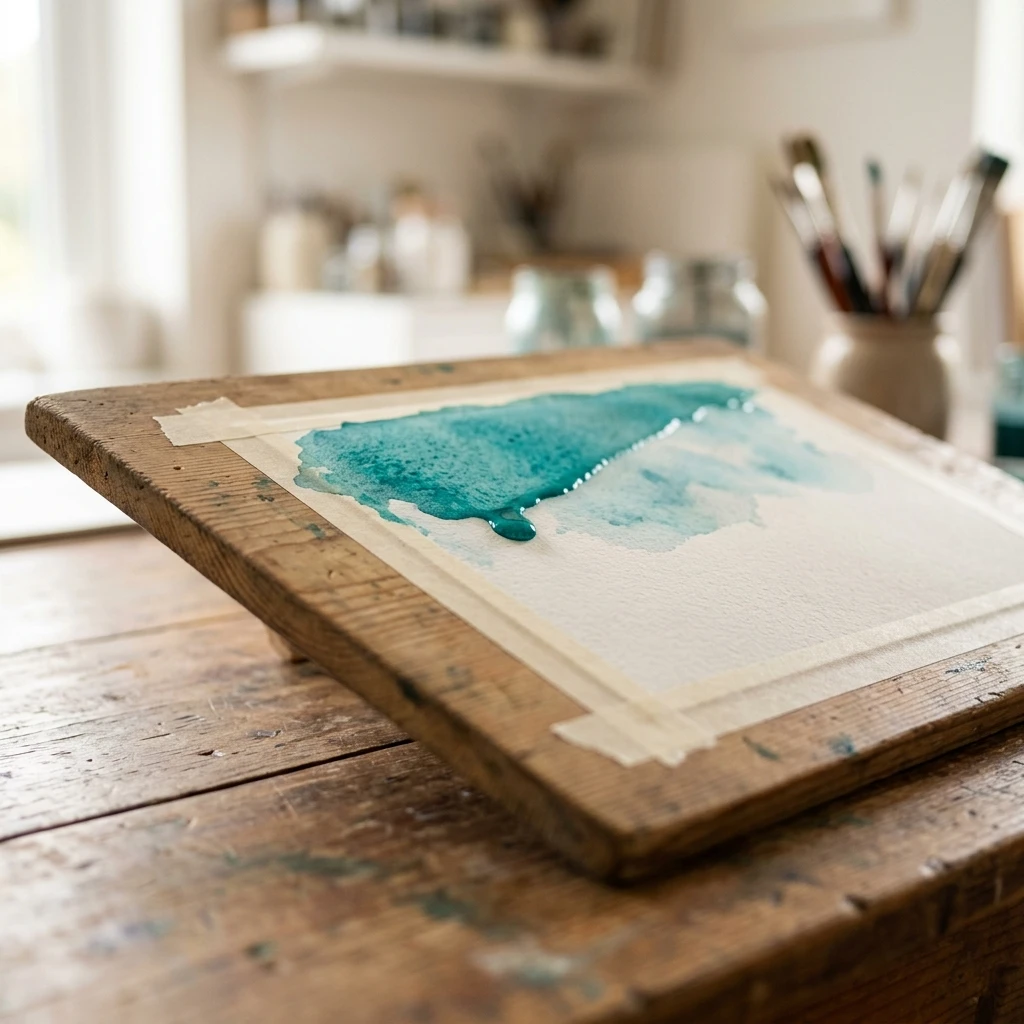
Prop the top of your drawing board up roughly two inches using a roll of tape, a thick book, or a small block of wood. When you lay down a wash, the pigment gathers along the bottom edge of your stroke into a thick line of pooled water called a bead. You can then drag that bead slowly downward, pulling it across the paper in smooth, even strokes.
Paint completely flat and water puddles unpredictably, drying into the harsh rings and blooms that beginners dread. Paint completely upright, and the colored water streams down the page before your brush can catch up. At 15 degrees, you're in control.
Securing Your Paper
A 15-degree tilt only works if your paper stays flat. Watercolor paper absorbs water and warps as it dries, and water runs into those warped valleys, drying into uneven streaks that no amount of technique can fix.
- Masking Tape: Secure all four sides of your paper to a rigid board before you start. Masking tape works perfectly and costs almost nothing. Run a strip along each edge, press it down firmly, and your paper has nowhere to go.
- Watercolor Blocks: If you'd rather skip the tape entirely, watercolor blocks are pads of paper glued on all four sides at the factory, keeping every sheet flat and ready to paint on without any preparation.
- Use a Thirsty Brush: One more thing worth knowing: as your wash moves down the page, the bead at the bottom edge grows heavier. If you let it dry on its own, it pulls back into the painting and leaves a hard line. Use a dry brush squeezed out so it's thirsty rather than wet to gently absorb that excess bead before it causes trouble. It takes two seconds and saves the wash.
THE SETUP IN FULL
Board on a 15-degree tilt. Paper taped on all four sides. Thirsty brush nearby for the bead. That's the entire watercolor workspace. No easel required.
Continue learning with the next step in this watercolor series.