A complete beginner's guide to equipment for painting birds and backgrounds in watercolor
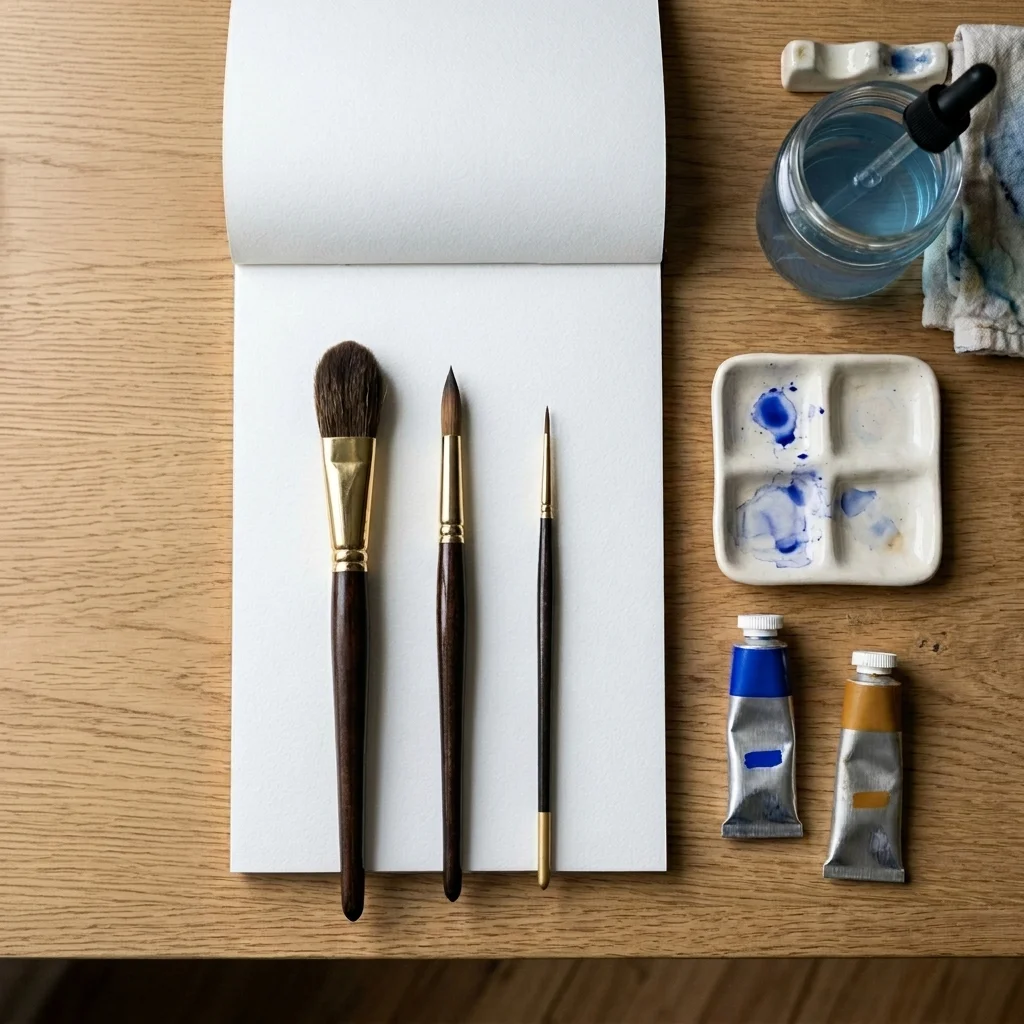
"I walked into the art store and froze. Hundreds of brushes, dozens of paint brands, paper in every weight and texture — and absolutely no idea where to start."
One of the beautiful things about watercolor is how few supplies you actually need to start painting well. Unlike other mediums, you don’t need easels, toxic solvents, or massive carrying cases.
To move forward with confidence and avoid wasting money on unnecessary materials, focus your attention on three key areas of investment for bird painting in watercolor.
Note: If you're looking for exact brand recommendations and links to the specific tools I use every day, you can find my full setup on the Recommended Materials page.
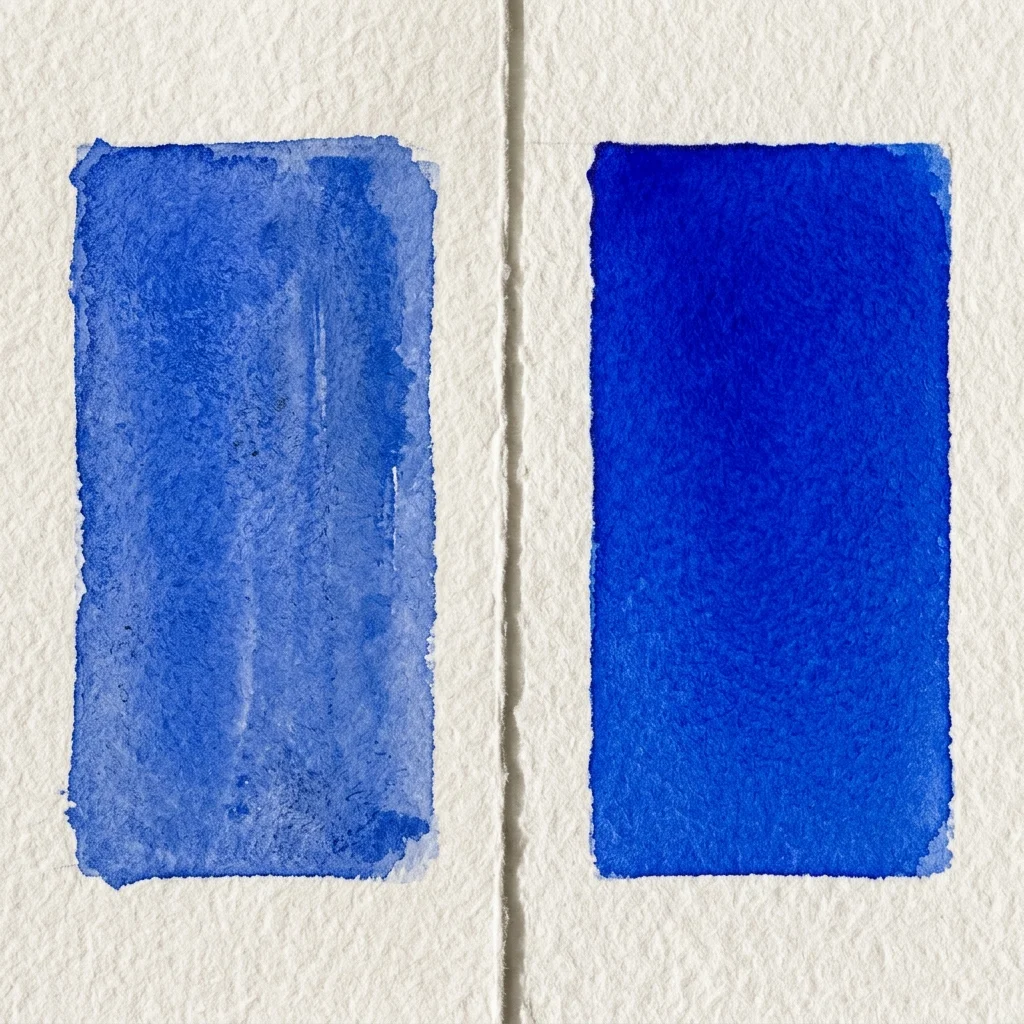
1. The Paper (Your Most Important Investment)
Watercolor paper is the absolute foundation of your painting. If you buy cheap paper, it doesn’t matter how good your brushes or paints are, they will dry flat, streak unpredictably, and warp uncontrollably.
Always choose 100% cotton, cold-pressed paper, such as Arches or Saunders Waterford. It acts like a sponge, staying uniformly damp, helping you blend backgrounds and lift highlights on your birds.
2. The Brushes (You Only Need Three)
You don’t need elaborate brush sets. These three brushes are all it takes to paint a bird in its habitat:
- A large mop or quill brush for flooding the paper with water and laying down those big, loose, atmospheric background washes without streaks.
- A size 8 synthetic round brush as your workhorse. A good round brush holds water well but comes to a fine point — use it to block in the bird’s body, wings, and larger shadows.
- A size 2 rigger or liner brush for the fine work. Originally designed for painting the rigging on ships, it’s the ultimate tool for fine feather textures, eyes, and sharp beaks.
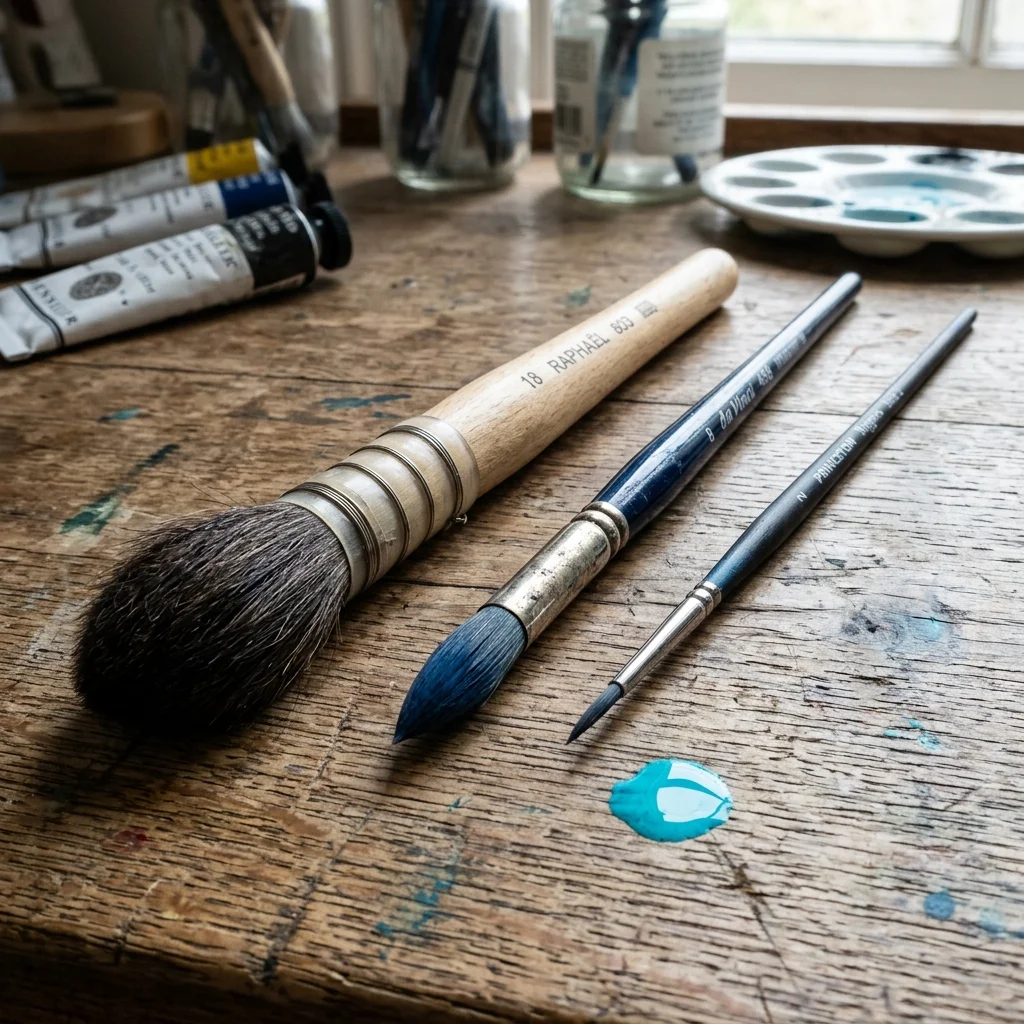
3. The Paint (Quality Over Quantity)
Do not buy student-grade paints or paint sets. Student grade paints use less pigment and more fillers, resulting in dull, chalky mixes.
Instead, buy six small tubes of professional-grade watercolors. A warm yellow (Cadmium Yellow or Hansa Yellow Deep) and a cool yellow (Lemon Yellow). A warm red (Cadmium Red or Pyrrol Scarlet) and a cool red (Quinacridone Rose or Permanent Rose). A warm blue (Ultramarine Blue) and a cool blue (Cerulean Blue or Cobalt Blue). This is all you need to mix almost any color in nature. Six colors sounds limiting until you discover how much variety they create. Nearly every bird color you'll ever need can be mixed from a warm and cool of each primary. Professional tubes will last you years too.
The Extras
Round out your desk with two water jars. One to rinse dirty pigment, one to pick up clean water for fresh washes. A roll of masking tape, paper towels for lifting, and a ceramic mixing palette. Avoid plastic palettes. Water physically beads up on the surface, making it difficult to judge your mixes.
READY TO PAINT
All you need is cotton paper, three brushes, a limited professional palette, and a ceramic plate. Keeping it simple and investing in paper will show results in your first wash.
Continue learning with the next step in this watercolor series.